








AI Therapy vs Real Emotional Awareness: What Actually Works?
AI therapy is rising, but real emotional awareness drives change. Discover what truly works for long-term emotional growth.
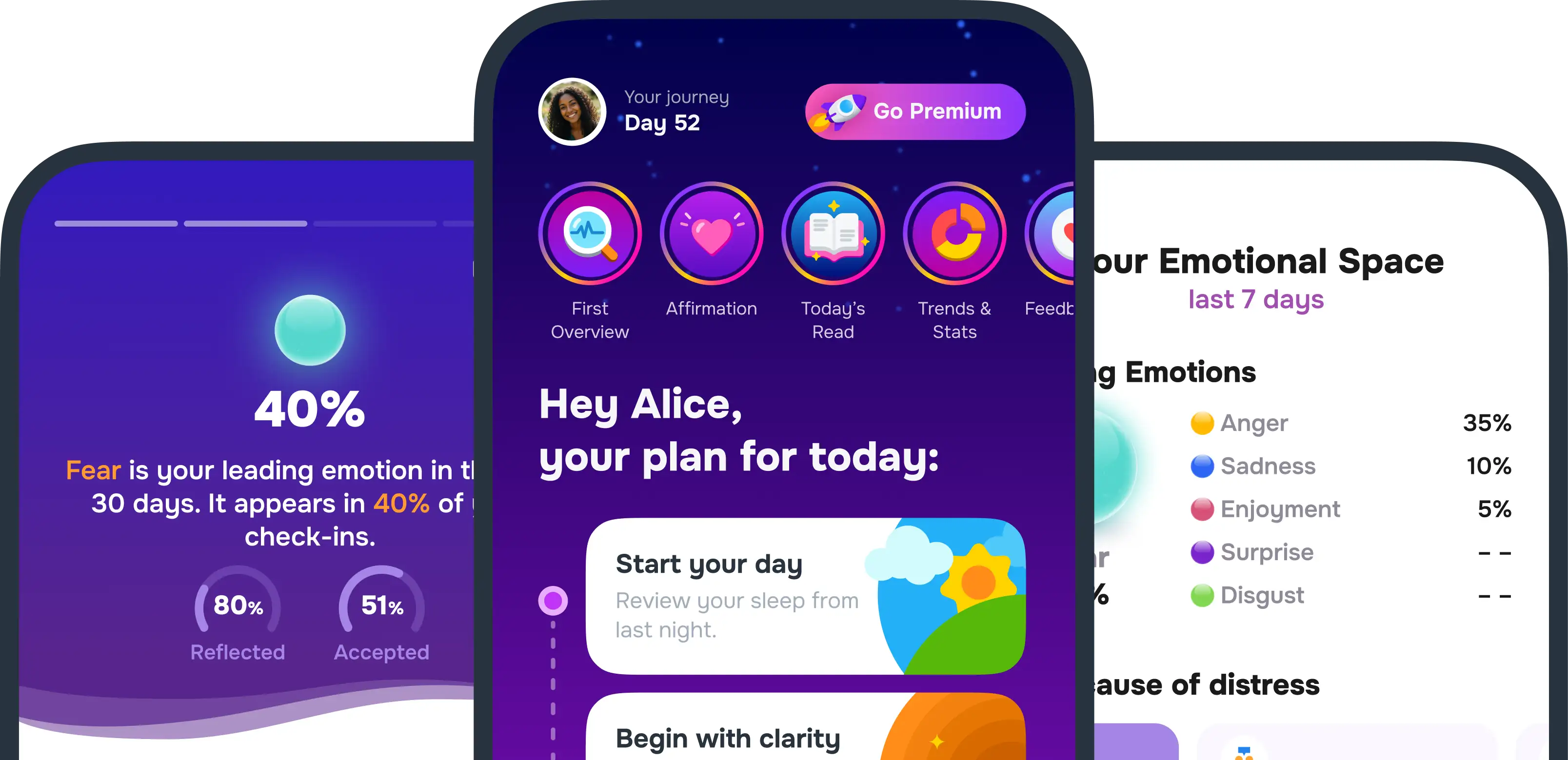
Read moreSphera is an emotion tracker and guided journal for self-awareness that helps you turn your emotions into allies, understand patterns, restore balance, and feel more confident facing life’s challenges.

Choose a feeling, and Sphera will show you what may be hidden behind it. The answer might surprise you.

Fear is one of the oldest emotions, helping humans survive when we detect a threat to our wellbeing. Today, fear is often triggered not by real danger, but by things we doubt we can handle or control.
Enjoyment highlights your real desires, needs, and values. It helps you notice what brings you pleasure, meaning, or a sense of achievement, and motivates you to keep going.
Sadness appears when we are losing something important: a person, a familiar way of life, an opportunity, or hope. This emotion helps us slow down, recognize that something truly mattered, and gradually process the loss.
Anger is a powerful survival emotion that protects your wellbeing, boundaries, and values. It can lead to conflict or impulsive reactions, but when managed well, it becomes a force for change and self-protection.
Disgust evolved to help humans avoid spoiled food, disease, dirt, and infection. Today, it often appears in response to actions, words, situations, or behavior you see as unacceptable, toxic, or against your values.
Surprise appears when something unexpected happens: something new, strange, sudden, or different from what you expected. Surprise gives the brain a brief pause to assess the situation: is this a threat, an opportunity, a mistake in your expectations, or something important you should not miss?
A lot of us don’t instantly connect trouble sleeping with our emotions. We try to fix it with routines, supplements, or medication, and very often it doesn’t solve the problem.
For many people, insomnia is caused by stress and anxiety that keep the mind active at night. Research from the American Academy of Sleep Medicine shows that over 70% of adults report stress-related sleep disruption, and nearly 80% report anxiety-related disruption.
When you start noticing your emotions and what triggered them, you can navigate these states more easily. Instead of feeling stuck, you take time to calm your mind with grounding techniques like deep breathing, create enough emotional space, and then move on to solving the problem.
A lot of us don’t instantly connect constant anxiety with our emotions. We try to control it with routines, distractions, or avoidance, and very often it doesn’t solve the problem.
Anxiety is often fueled by unprocessed fear, uncertainty, and stress signals that stay active in the body and mind. When these patterns go unnoticed, the nervous system remains on high alert.
Tracking emotions helps you spot triggers, notice patterns, and separate real danger from emotional overload. That awareness creates space to regulate yourself and respond more calmly.
A bad mood can feel random, but it often carries important emotional information. If you only try to push through it, you may miss what your mind and body are trying to tell you.
Low mood may be connected to disappointment, exhaustion, loneliness, or emotional suppression. Without reflection, these states tend to repeat and affect motivation, energy, and relationships.
When you learn to name the feeling underneath the mood, the situation becomes clearer. Emotional tracking helps you understand what is happening and choose supportive actions instead of staying stuck.
Anger is often judged or suppressed, so many people try to silence it instead of understanding it. But anger usually points to boundaries, unmet needs, or accumulated stress.
Anger can grow from repeated frustration, overload, hurt, or feeling unheard. When the real cause stays hidden, reactions become more intense and harder to manage.
By tracking anger and the emotions around it, you start seeing what activates it and what helps regulate it. Awareness makes it easier to respond instead of react impulsively.
Overeating is not always about hunger. Sometimes it becomes a way to cope with emotional discomfort, stress, emptiness, or overwhelm when it is hard to pause and notice what is really happening.
Emotional eating is often linked to stress, anxiety, sadness, or boredom. Food can bring temporary relief, but it doesn’t resolve the emotion underneath the habit.
When you start tracking your emotions before and after eating, patterns become visible. That helps you understand your emotional needs and find healthier ways to support yourself.
Emotional intelligence is not something you either have or don’t have. It grows when you consistently notice, understand, and work with your inner experience.
Many people were never taught how to identify emotions clearly or respond to them with awareness. As a result, communication, self-regulation, and resilience become harder.
Daily emotional journaling builds the habit of noticing what you feel, why it happens, and what helps. Over time, that practice strengthens emotional clarity, empathy, and resilience.
Here, you’ll find a safe space to better understand your emotions, with clear guidance to help you work through them.
Most people who come to therapy start with this question. All your moods and feelings are more complex emotional states and come from six basic emotions: anger, fear, sadness, disgust, surprise, and enjoyment. They are universal across cultures, regardless of language, country, religion, race, or age, and they play a crucial role in our survival and wellbeing.
Recognizing them is a powerful first step. It helps you understand what’s really going on inside and where it started. Emotions are our natural built-in alarm system that has helped us survive and thrive for thousands of years. Modern everyday life brings new challenges. Many of them have shifted from physical threats to emotional ones, and we are now facing mental health challenges that our evolutionary mechanisms were not designed for.
Therapists and psychologists recommend Sphera as a supportive tool for developing emotional awareness between sessions and as a self-help tool.
See their statementsSphera combines therapist-approved methods with practical tools that help you understand, regulate, and grow through your emotions.
Name what you’re feeling and identify what triggered it.
Structured questions that turn emotional reactions into insight.
Regulate your stress response with guided breathing techniques.
Track your sleep and see how it impacts your emotional balance.
Log daily moods to uncover patterns over time.
Set clear emotional growth goals and track your progress.
Answer questions to learn a little bit more about yourself.
Track how your emotions and reactions change.
Understand how your daily factors influence your emotional state.
Build a daily habit of noticing what’s working in your life.
Daily prompts that gently reframe your thinking.
Evidence-based articles to deepen your understanding of emotions.
Practical insights grounded in psychology to help you understand and manage your emotions.



Sphera is a science-based emotional journal designed to help you understand your emotions, notice patterns, and build emotional awareness through gentle daily reflection.
Unlike traditional journals, Sphera guides you with thoughtful questions, emotion insights, and structure — so you’re not just writing, but learning to understand what you feel and why.
No. Sphera is flexible and adapts to you. Some people use it daily, others check in only when something feels off. Even occasional reflection can be helpful.
Yes. Many people use Sphera alongside therapy to stay more aware of their emotions between sessions and bring clearer insights into conversations with their therapist.
Yes. Your reflections are private. We take data security seriously and never share your personal entries without your consent.
Not at all. Sphera is designed to be intuitive and accessible, whether you’re new to emotional reflection or already familiar with self-awareness practices.
That’s completely normal. Sphera helps you explore your state step by step, offering emotion suggestions and simple explanations to make naming feelings easier.
No. Sphera is a self-reflection and emotional awareness tool, not a substitute for professional mental health care. It works best as a supportive companion.
Understand yourself better, build emotional intelligence and resilience through science-based emotional journaling.