
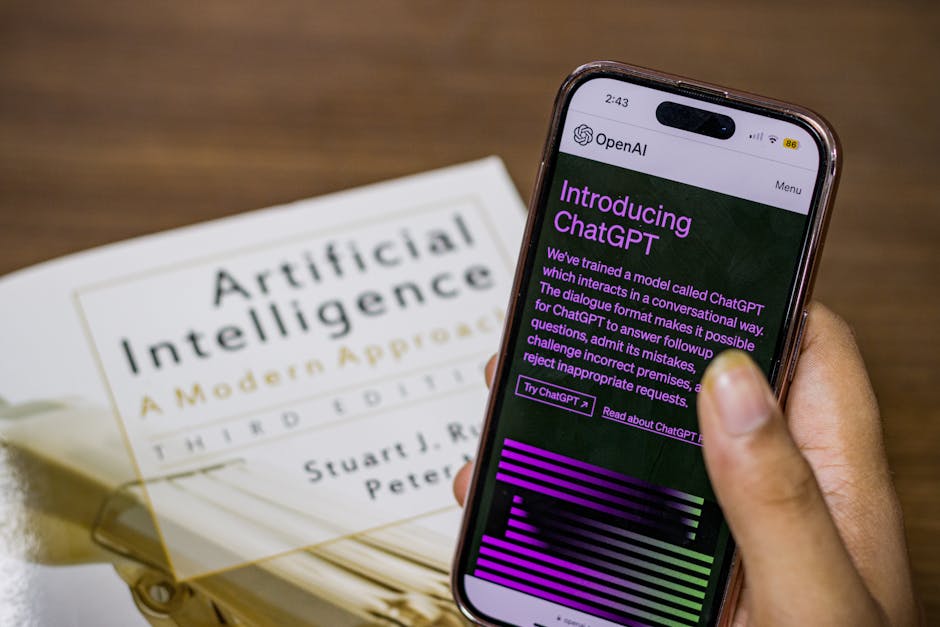
Introduction: The Rise of AI Therapy and the Illusion of Emotional Progress
Over the past few years, AI therapy has rapidly positioned itself as a convenient solution for emotional support. Millions of users now rely on conversational AI tools to process thoughts, relieve stress, and simulate meaningful dialogue. The appeal is obvious: instant availability, zero judgment, and the ability to engage at any moment without social friction. In a world where access to traditional therapy remains limited by cost, time, or geography, AI seems to offer a scalable alternative.
However, beneath this convenience lies a more nuanced reality. While AI therapy can mimic emotional support convincingly, it does not necessarily lead to deeper emotional awareness or lasting psychological change. The distinction between feeling temporarily better and actually understanding oneself is critical, yet often overlooked. As emotional well-being becomes a central focus in modern life, it is essential to evaluate whether AI-based conversations truly contribute to growth or merely create the illusion of progress.
This is where the comparison between AI therapy and structured emotional awareness becomes relevant. The former is reactive and conversational, while the latter is systematic and grounded in established psychological frameworks. Understanding the difference is not just theoretical—it directly impacts long-term mental health outcomes.
What AI Therapy Actually Does: Strengths and Functional Limits
AI therapy operates through language models trained on vast datasets of human conversation. When a user expresses an emotion, the system generates a response that aligns with patterns of empathy, validation, and cognitive reframing. This creates an experience that feels supportive and, in many cases, surprisingly insightful.
From a functional standpoint, AI therapy excels in several areas. It provides immediate emotional relief by acknowledging feelings and offering perspective. It can help users articulate thoughts that might otherwise remain vague or suppressed. It also introduces basic psychological concepts in an accessible format, lowering the barrier to entry for those unfamiliar with mental health practices.
Despite these advantages, the limitations are structural rather than superficial. AI does not possess a continuous, evolving understanding of the individual. It does not build a coherent model of emotional patterns over time, nor does it track behavioral responses in a meaningful way. Each interaction, while contextually aware, remains largely isolated from a deeper longitudinal framework.
This creates a fundamental constraint. AI therapy can respond effectively within a single conversation, but it cannot construct a reliable system for understanding emotional dynamics across days, weeks, or months. As a result, it often addresses symptoms rather than underlying patterns.
The Core Issue: Simulation of Support vs Development of Awareness
The distinction between simulation and awareness is central to evaluating the effectiveness of AI therapy. Simulation involves generating responses that resemble empathy, while awareness requires the identification, tracking, and interpretation of emotional states over time.
When a user interacts with AI, the experience can feel meaningful because the responses are linguistically accurate and emotionally aligned. However, this alignment is based on probability, not personal insight. The system predicts what a supportive response should look like, rather than deriving it from a structured understanding of the individual’s emotional history.
In contrast, real emotional awareness is built through consistent observation and analysis. It involves recognizing recurring triggers, understanding emotional intensity, and identifying behavioral consequences. This process cannot be replaced by isolated conversations, no matter how well-crafted they may be.
The consequence of relying solely on AI therapy is subtle but significant. Users may experience temporary clarity without developing the tools needed for long-term change. Over time, this can lead to a cycle where the same emotional challenges reappear, prompting repeated reliance on conversational support without meaningful progression.
Why Conversations Alone Rarely Lead to Lasting Change
Human memory is inherently unreliable when it comes to emotional experiences. Individuals tend to reconstruct past feelings based on their current state, which introduces bias and distortion. Without a structured method of recording and analyzing emotions, it becomes difficult to identify patterns with accuracy.
AI therapy, being conversation-based, inherits this limitation. It depends on the user’s ability to recall and articulate experiences in real time. There is no built-in mechanism to validate or contextualize these recollections against objective data. As a result, insights gained during a conversation may lack consistency or depth.
Furthermore, emotional growth requires feedback loops. It is not enough to express feelings; one must also observe how those feelings evolve and how responses change over time. This involves comparing past states, identifying trends, and adjusting behavior accordingly. Conversational AI does not inherently support this process, as it lacks persistent tracking and analytical capabilities.
In practical terms, this means that while AI can facilitate reflection, it does not ensure continuity. Each session may feel productive, but without integration into a broader system, the cumulative impact remains limited.
What Real Emotional Awareness Looks Like in Practice
Real emotional awareness is a structured process grounded in psychological research. It extends beyond simply naming emotions and involves a multi-layered understanding of internal states and external influences. At its core, it requires consistent tracking, analysis, and interpretation.
This process typically includes identifying specific emotions rather than general moods, recognizing triggers that lead to these emotions, and observing the behaviors that follow. Over time, patterns begin to emerge, providing insight into how certain situations consistently affect emotional responses.
Unlike conversational approaches, structured emotional awareness relies on data accumulation. Each recorded experience contributes to a larger dataset, enabling more accurate analysis. This transforms subjective impressions into observable trends, which can then inform decision-making and behavioral change.
At this point, the distinction between a simple mood tracker and a true emotion tracking app becomes critical. Tools built on psychological models enable users to move beyond vague self-reflection into precise emotional mapping. Sphera is designed around this principle, combining emotion journaling with structured frameworks derived from emotional science. Instead of responding to isolated inputs, it builds continuity across time, allowing users to see how their internal states evolve and what consistently influences them.
Mood Tracking vs Emotion Tracking: Why Precision Changes Everything
The terms “mood tracker” and “emotion tracker” are often used interchangeably, but they represent fundamentally different levels of depth. Mood tracking captures generalized states such as “good” or “bad,” offering a high-level overview of well-being. While useful for quick check-ins, it lacks the specificity required for deeper insight.
Emotion tracking, by contrast, focuses on identifying precise emotional states and linking them to concrete triggers. This distinction may seem subtle, but it fundamentally changes the quality of self-awareness. Understanding whether you feel anxious, frustrated, or disappointed provides far more actionable information than simply noting that you feel “off.”
An advanced emotion tracking app structures this process in a way that encourages accuracy and consistency. Within Sphera, users engage in emotion journaling that is guided by established psychological frameworks, making it easier to differentiate emotions and understand their origins. Over time, this level of detail reveals patterns that would remain invisible within a basic mood tracker.
This precision is what enables real change. Without it, emotional awareness remains superficial.
From Conversation to System: A Different Category of Tool
The growing popularity of AI therapy reflects a demand for accessible emotional support, but it also highlights a misconception: that conversation alone is sufficient for growth. In reality, conversation is only one component of a much larger process.
A structured system introduces elements that AI lacks by design—continuity, data accumulation, and analytical feedback. Rather than focusing solely on how a user feels in a given moment, it captures those experiences in a way that can be revisited, compared, and understood over time.
This is where tools like Sphera represent a meaningful shift. Built on psychological theories and informed by professional insights, it does not attempt to simulate a therapist. Instead, it provides a framework for developing emotional awareness through consistent tracking and reflection. The result is not just temporary clarity, but a growing understanding of one’s emotional landscape.
For users who want to move beyond reactive conversations and into structured self-awareness, this distinction becomes decisive. The goal is no longer to simply feel better in the moment, but to understand why those feelings arise and how they can be managed more effectively.
A Structured Alternative: Moving Beyond AI With Real Emotional Awareness
While AI therapy provides conversational relief, it does not replace the need for a structured system that builds real emotional awareness over time. The difference lies not in how supportive the interaction feels, but in whether it produces cumulative insight.
Sphera approaches emotional well-being from this perspective. Grounded in established psychological frameworks and refined through practical application, it focuses on helping users understand their emotions rather than simply respond to them. By integrating emotion tracking, emotion journaling, and analytical feedback, it creates a continuous loop of reflection and insight.
This approach transforms an emotion tracker into something more substantial. Instead of isolated entries, users build a coherent record of their emotional experiences. Patterns become visible, triggers become predictable, and responses can be adjusted with greater awareness. Over time, this leads to a shift from reactive behavior to intentional regulation.
For those who want to explore this method in practice:
This is not a replacement for conversation, but an evolution beyond it. Where AI therapy offers immediate interaction, structured emotional awareness provides long-term transformation.